

What Is Histopathology? Definition, Process, and Applications
Updated: Mar 10
Histopathology is the microscopic examination of tissue to identify structural and cellular changes caused by disease. It is widely used in clinical diagnosis, cancer evaluation, toxicology, and biomedical research to help pathologists and scientists understand how disease affects organs and tissue architecture.
In this guide, we explain the histopathology workflow step by step, compare histopathology vs. histology, review common staining methods such as H&E and IHC, and outline why this field is important in both clinical practice and research.
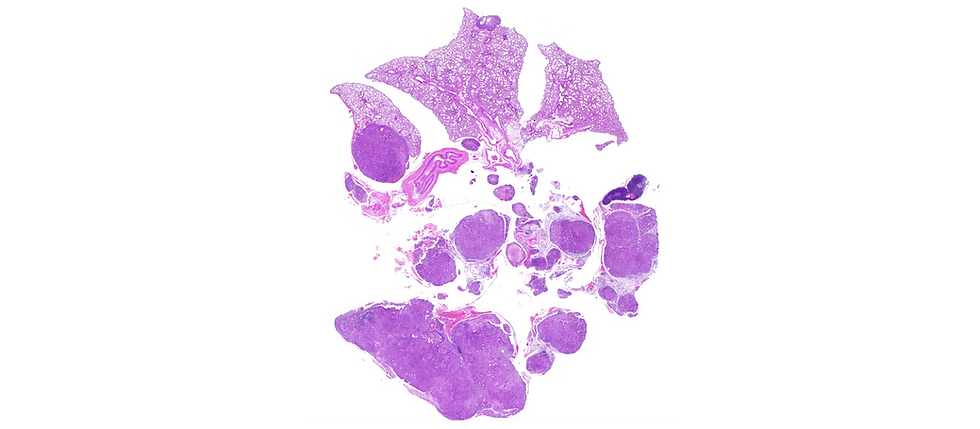
Histopathology: Definition and Key Features
Histopathology is a specialized branch of pathology focused on the microscopic examination of tissue to identify disease-related changes. Unlike cytopathology, which examines individual or loose cells, histopathology preserves tissue architecture, allowing pathologists to evaluate how cells are organized within their surrounding environment.
By examining stained tissue sections, such as biopsies or surgical specimens, pathologists can identify important morphological changes including inflammation, necrosis, fibrosis, dysplasia, and neoplasia. These tissue-level findings play an important role in disease diagnosis, prognosis, treatment evaluation, and biomedical research.

Wild-type PASD Staining 
Disease Model PASD staining
Figure 2. Example of stained tissue sections viewed under the microscope. Histopathology allows pathologists to compare normal and abnormal cellular features, evaluate tissue architecture, and identify disease-related changes in stained specimens. Click the image to view the whole slide.
Histology vs. Histopathology: What’s the Difference?
Although histology and histopathology are sometimes used interchangeably, they refer to different types of tissue examination.
Histology focuses on the normal microscopic anatomy of tissue and helps establish what healthy tissue looks like.
Histopathology examines tissue affected by disease and identifies abnormal cellular and structural changes.
Feature | Histology | Histopathology |
Primary Focus | Normal, healthy tissue anatomy | Diseased tissue & cellular abnormalities |
Key Objective | To establish a baseline reference | To identify and interpret disease-related changes |
Typical Use | Normal tissue evaluation and baseline comparison | Disease diagnosis and abnormal tissue assessment |
Typical Observation | Regular cell layers & structures | Inflammation, necrosis, tumors, fibrosis |
For example, a routine histology review may describe the normal layered structure of healthy tissue, while a histopathology evaluation focuses on abnormalities such as inflammation, necrosis, fibrosis, or tumor-related changes.
Why it matters:
Understanding the difference helps researchers and clinicians choose the right type of tissue evaluation. Histology is useful for assessing normal tissue structure, while histopathology is essential for identifying disease-related changes and interpreting their significance.
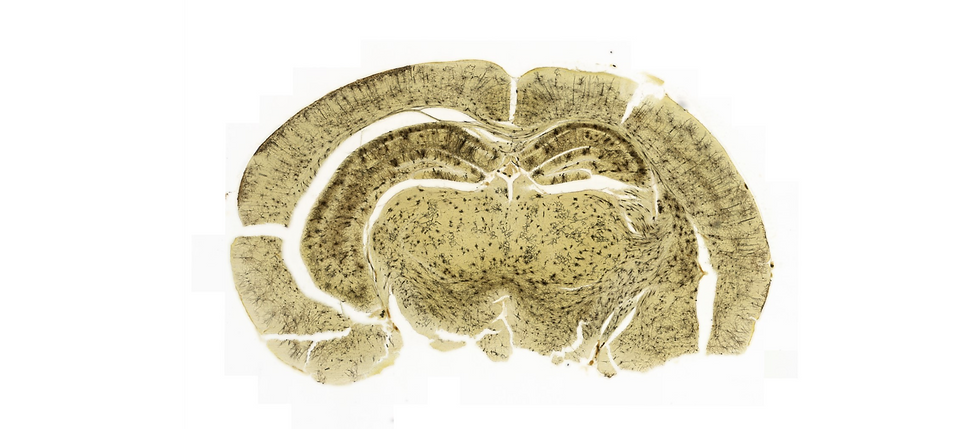
Histopathology Workflow: Step by Step
A standard histopathology workflow typically includes the following steps:
Tissue Collection and Fixation
Tissue samples, such as biopsies or surgical specimens, are collected and fixed in formalin to preserve morphology and prevent degradation.
Processing and Embedding
Water is removed from the tissue and replaced through a series of processing reagents before the sample is embedded in paraffin to support precise sectioning.
Sectioning (Microtomy)
Thin tissue sections, typically around 4–5 µm, are cut using a microtome and mounted onto glass slides.
Staining
H&E staining is the most commonly used method in histopathology. Additional techniques, such as immunohistochemistry (IHC) and special stains, may be used depending on the tissue type and diagnostic question.
Microscopic Review
A pathologist or trained reviewer examines the slides to identify tissue architecture, cellular morphology, and disease-related abnormalities.
Interpretation and Reporting
The findings are interpreted and documented in a pathology report, which may include descriptive observations, diagnostic features, and clinical or research context.

Common Histopathology Techniques
The most commonly used stain in histopathology for evaluating overall tissue architecture and cellular morphology. Hematoxylin stains nuclei blue, while eosin stains cytoplasm and extracellular structures pink.
Used to highlight specific tissue components or microorganisms, such as collagen (Masson’s Trichrome), mucin (PAS), bacteria (Gram), or iron (Prussian Blue).
Uses antibodies to detect specific proteins within tissue sections and is widely used to characterize cell types, biomarkers, and disease-related expression patterns.
Glass slides can be scanned into high-resolution digital images for remote review, teaching, consultation, image analysis, and long-term archiving.

Why Histopathology Matters
Histopathology plays an important role in both clinical medicine and biomedical research.
Disease Diagnosis
Helps identify inflammation, infection, fibrosis, neoplasia, and other structural abnormalities in tissue.
Cancer Evaluation
Supports tumor classification, grading, margin assessment, and biomarker interpretation.
Treatment Planning and Monitoring
Provides information that can guide clinical decisions and help evaluate tissue response to therapy.
Toxicology and Safety Assessment
Reveals tissue injury, organ-specific toxicity, and treatment-related changes in preclinical and translational studies.
Biomedical Research
Helps researchers connect molecular findings with tissue architecture, cellular morphology, and disease mechanisms.
Modern histopathology also increasingly relies on digital slide review, allowing tissue findings to be examined and shared at multiple magnifications.
Interactive whole slide image viewer. Readers can zoom in and out to examine tissue architecture and cellular detail.
The Future of Histopathology
Histopathology continues to evolve with advances in digital pathology, image analysis, multiplex imaging, and spatial biology.
Digital Image Analysis
Software tools can help quantify staining intensity, cell counts, area measurements, and other reproducible tissue features.
Multiplex Imaging
Advanced imaging approaches make it possible to visualize multiple biomarkers within the same tissue section.
Spatial Biology
Spatial methods connect gene or protein expression data with tissue architecture and cellular location.
Remote and Collaborative Review
Digital pathology supports remote consultation, data sharing, and collaborative slide review across locations.
Together, these advances are expanding how histopathology is used in research, diagnosis, and data-driven tissue analysis.
Conclusion
Histopathology remains one of the most important tools in modern biomedical science. Its ability to reveal cellular and structural changes caused by disease continues to make it essential in diagnosis, research, and tissue-based analysis.
Whether used in clinical diagnosis, cancer evaluation, toxicology, or biomedical research, histopathology provides critical insight into how disease affects tissue structure and cellular organization.
Looking for histopathology, staining, or digital pathology support?
Frequently Asked Questions About Histopathology
What is histopathology used for?
Histopathology is used to examine tissue under a microscope to identify disease-related changes, support diagnosis, evaluate treatment effects, and advance biomedical research. It is commonly used in cancer evaluation, toxicology, and translational research.
How is histopathology different from histology?
Histology refers to the study of normal tissue structure, while histopathology focuses on tissue affected by disease or other abnormalities. Histopathology helps reveal how disease changes cells, tissue architecture, and overall morphology.
What stains are commonly used in histopathology?
The most common stain is hematoxylin and eosin (H&E). Other commonly used methods include PAS, Masson’s trichrome, Prussian blue, and immunohistochemistry (IHC), depending on the tissue type and diagnostic question.
What is the histopathology process?
The process usually includes tissue fixation, paraffin embedding, sectioning, staining, and microscopic examination. In many laboratories, slides may also be digitized for remote review, consultation, or image analysis.
Can histopathology be done digitally?
Yes. Many laboratories can scan slides into high-resolution whole slide images (WSI), allowing digital review, remote consultation, teaching, and image analysis. This approach is commonly referred to as digital pathology.


